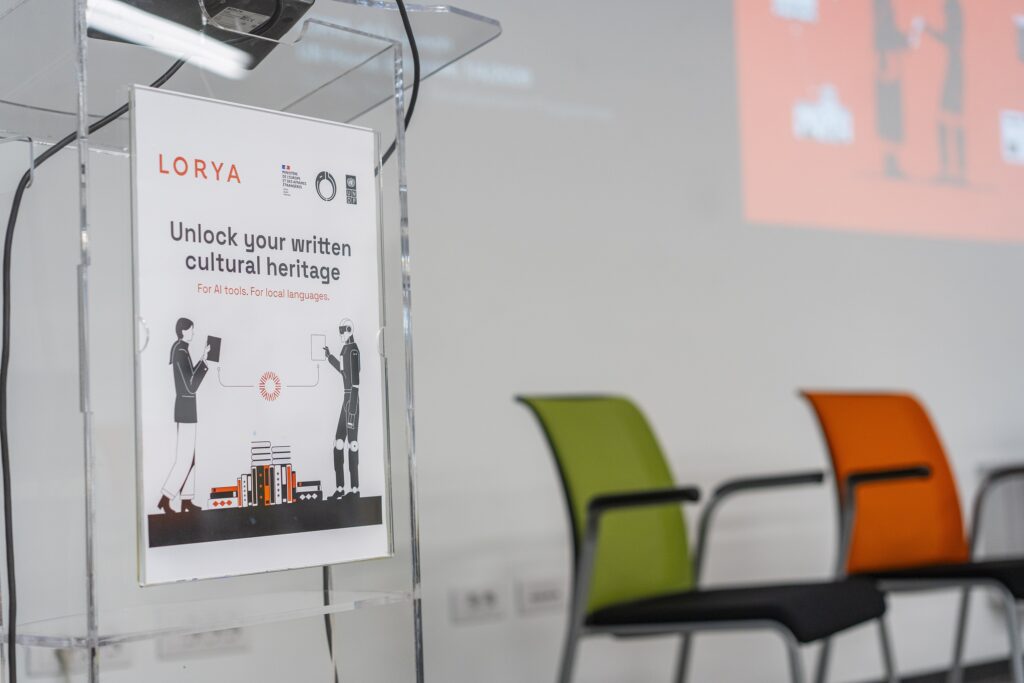
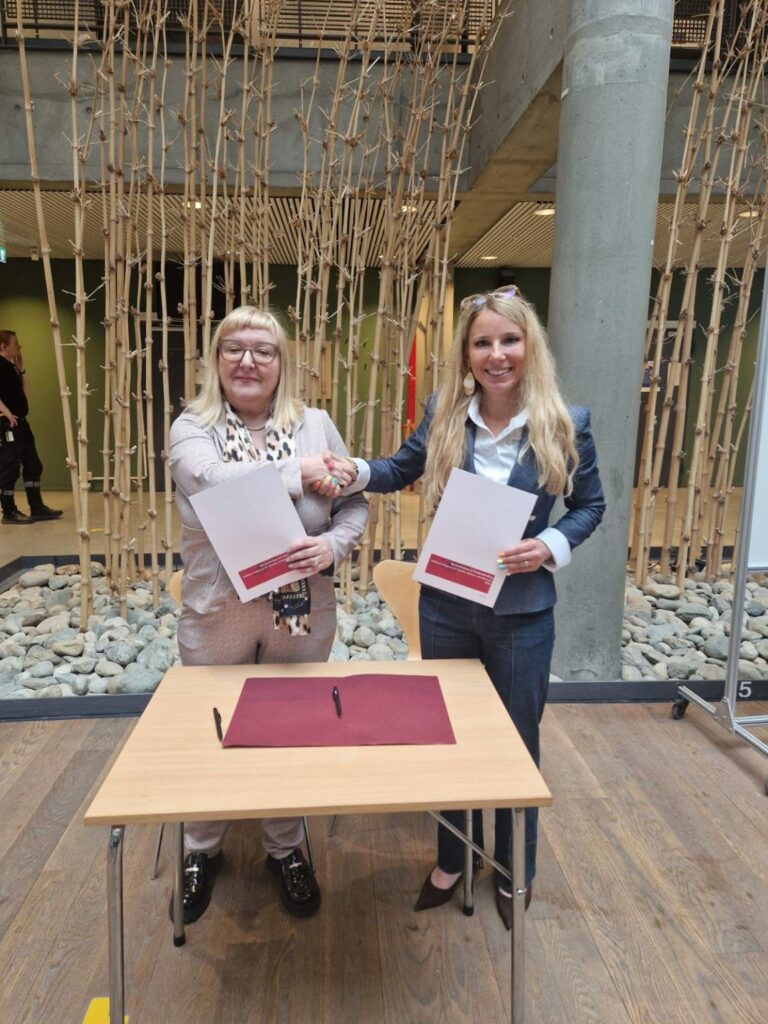
Come on, Lorya…
The National Library of Serbia, an AI4LAM Founding Member Organisation, in collaboration with UNDP Serbia and the Mathematical Institute of the Serbian Academy of Sciences and Arts, has been actively advancing innovative approaches to the preservation and accessibility of cultural heritage through artificial intelligence and digital technologies. Together, they developed and launched Lorya, a sophisticated AI-enhanced platform designed to unlock written cultural heritage in low-resource languages.
 Jakov Simović
Since its launch at the UN House in Belgrade on 1 April 2026, the National Library of Serbia has been eagerly awaiting the opportunity to begin working with Lorya, a sophisticated AI-enhanced platform designed to unlock written cultural heritage in low-resource languages.
What Is Lorya?
Lorya is an open-source, web-based platform, available at https://lorya.ai/, that provides cultural heritage institutions with advanced AI tools for the digitisation of historical documents, particularly those written in low-resource and orthographically complex languages. It is developed by UNDP Serbia, upon the solution originally created by the Mathematical Institute of the Serbian Academy of Sciences and Arts for the National Library of Serbia. Supported by the Governments of France and Japan, the platform aims to transform the digitisation of historical collections and make them more accessible to researchers, institutions, and the public.
The Challenge
The National Library of Serbia faces two major obstacles on its path toward a fully searchable digital library.
The first is the vast number of low-quality digital images in its collections, particularly newspaper scans produced in the early 2000s. Many of these images contain distortions and imperfections that limit the effectiveness of even the most advanced Optical Character Recognition (OCR) tools.
The second challenge is post-OCR text correction. While OCR technology has made significant progress, inaccuracies remain inevitable, especially when dealing with historical documents, old typefaces, and complex page layouts. In today’s era of AI and large language models, users expect digitised texts to be highly accurate and easily searchable.
To address these challenges, the Mathematical Institute of the Serbian Academy of Sciences and Arts developed a solution tailored to the Library’s needs, including custom neural networks for image enhancement and post-OCR text correction. Recognising the wider potential of this work, UNDP Serbia joined the initiative and expanded the solution into what is now known as Lorya.
What Does Lorya Do?
Lorya helps institutions to:
- Read older typefaces, mixed alphabets, and complex document layouts.
- Produce clean, structured digital text that can be searched, analysed, and reused.
- Open cultural heritage collections to wider audiences.
- Support large-scale and more efficient digitisation initiatives.
How Does Lorya Work?
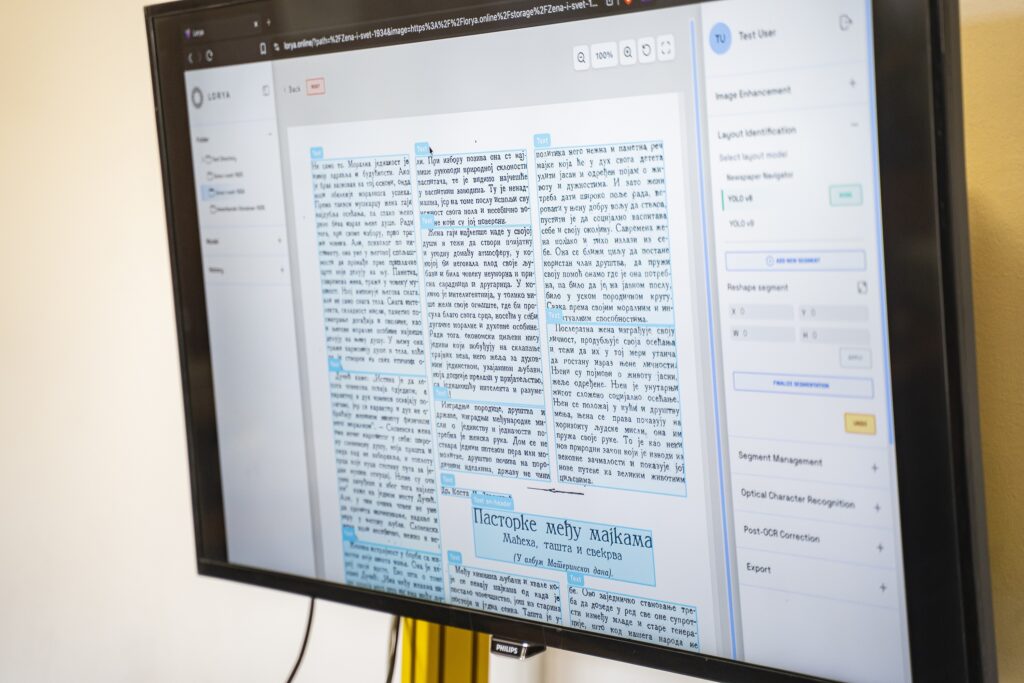
Lorya mirrors the workflow traditionally followed by digitisation professionals, enhancing every stage with artificial intelligence. The process consists of four key steps:
- Image Enhancement – Improving the quality of scanned documents to maximise readability and OCR performance.
- Layout Analysis – Identifying and separating text blocks, columns, images, and other page elements.
- Text Recognition (OCR) – Converting scanned images into machine-readable text.
- Post-OCR Correction – Using AI models to detect and correct recognition errors, significantly improving text quality and searchability.
Why It Matters
For libraries, archives, museums, and researchers, digitisation is no longer just about preserving historical documents. It is about making them discoverable, searchable, and usable in the digital age.
By combining image enhancement, OCR, and AI-powered text correction in a single open-source platform, Lorya has the potential to help cultural heritage institutions unlock vast collections that have remained difficult to access for decades.
As cultural heritage institutions around the world face similar digitisation challenges, Lorya demonstrates how open-source AI can help preserve the past while making it more accessible for future generations.
The National Library of Serbia is ready. Come on, Lorya. The cultural heritage is waiting.
A short video presenting Lorya can be viewed here.