
AI4LAM
COMMUNITY CALL
October 20, 2026 (15:00 UTC)
PART 1: AI4LAM Innovation Award Recipients
PART 2: Green ICT National Ecosystem
In the first part of the Community Call we will be delighted to present two of the four winners of the first-ever AI4LAM Innovation Awards. Established to recognize excellence in the application of AI within the GLAM sector, the awards highlight projects and individuals whose work is helping shape the future of cultural heritage.
In the second part of the Community Call, we will explore the broader impact of AI and what responsible AI use means in practice. Join us for a thought-provoking discussion on the environmental, social, and organizational considerations that are becoming increasingly important as AI technologies continue to evolve and expand.
PART 1:
2026 AI4LAM Innovation Award Recipients
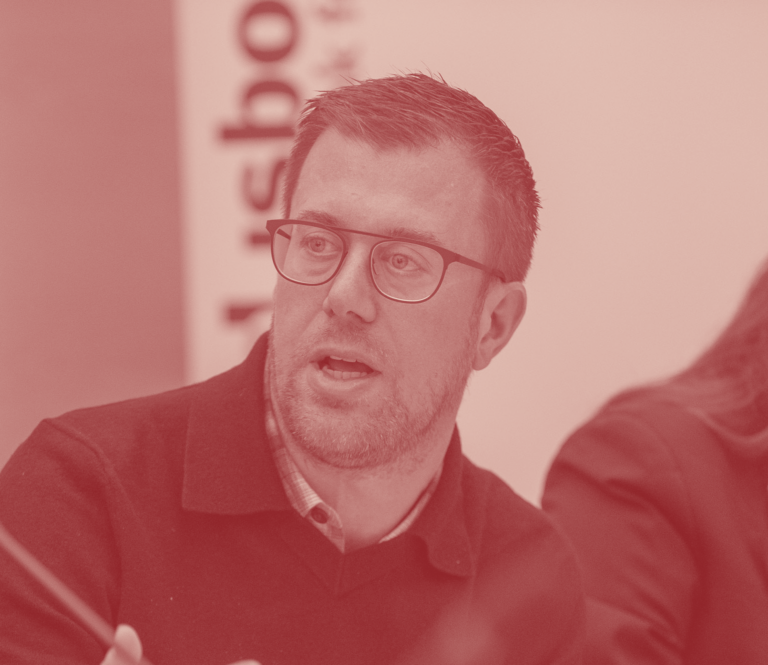
Seeing Metadata: AI Glasses in Cataloguing: Enhancing Trust, Context, and Human Oversight in LAM Workflows
This presentation will explore a practical AI implementation in cataloguing through the use of AI-enabled smart glasses for real-time metadata creation and MARC21 record generation. Attendees will learn how a cataloguer can scan a physical book using AI glasses, enabling the system to detect the item, extract bibliographic metadata, and generate a draft MARC21 record while the cataloguer simultaneously carries out essential physical processing tasks.
The session will examine how this approach redefines the concept of “human-in-the-loop” as “trust-in-the-loop,” ensuring that cataloguers remain actively involved in reviewing, validating, and refining AI-generated outputs. Particular attention will be given to the responsible integration of AI into LAM workflows, balancing efficiency, transparency, accountability, and professional expertise.
The presentation will showcase how KBR, the National Library of Belgium, has conceptualized and developed a custom AI-glasses application designed specifically for cataloguing workflows. Through practical examples, participants will discover how the solution supports real-time metadata creation, how it is being integrated into daily operations, and what opportunities and challenges have emerged along the way.
By embedding AI directly into physical cataloguing processes, AI glasses introduce a new interface for metadata creation that keeps professionals firmly in control while benefiting from automation. The session will demonstrate how this “Trust in the Loop” approach can provide a scalable and responsible model for AI adoption across libraries, archives, and museums, opening new possibilities for real-time hybrid workflows and metadata production for a wide range of materials.
Nine Months Is an Eternity: Assessing a Call-to-Action Framework for Content Authenticity and Provenance in the Age of AI
In February 2026, co-authors Kate Murray and Joshua Sternfeld released the open-access report “Content Authenticity and Provenance in the Age of Artificial Intelligence: A Call-to-Action for the LAMs Community.” Working with volunteer contributors from the C2PA and G+LAM Working Group, they recommended a collaborative framework for practitioners and administrators to respond to the challenges artificial intelligence poses for content authenticity and provenance (CAP).
Since its release, the report has received wide and positive response, including the AI4LAM Fantastic Futures Innovation Award for best paper. Murray and Sternfeld presented the call-to-action framework for numerous professional associations, including the Digital Library Federation, Trust in Archives Initiative, National Digital Stewardship Alliance, and several keynote presentations including International Federation of Television Archives (FIAT IFTA) and an AI Summit hosted by the University of Wyoming and Wyoming State Library.
This presentation will serve two purposes by combining a conceptual overview with practical application. In the first part, Murray and Sternfeld will introduce the risks and opportunities associated with AI and CAP, as introduced in the report, and take stock of the latest work/research in CAP from practitioner and scholar perspectives, using their own work as a touchstone. The presentation will reflect upon the progress the LAM community has taken to advance research, work with various public and private sectors, and respond to the rapid pace of technological development.


PART 2:
Green ICT National Ecosystem
Artificial Intelligence became popular in the end of 2022 with chat GPT, but the technology of machine learning is over 50 years old. From optimizing logistics to targeting marketing and curating social media feeds, machine learning systems have been used unseen for well over a decade. While the technology is not new, taking into account its climate and environmental factors is and as the AI enabled data center boom sees them pop up like mushrooms, these issues become more pressing than ever. AI’s impact is much more pressing than mere energy consumption. Come hear how far reaching these impacts are in the whole AI value chain and what you should consider when building and using AI models.

EVENT INFORMATION
Location
Date
UTC
Type
Online
- Welcome
- PART 1: 2026 AI4LAM Innovation Award Recipients
1. 1. Seeing Metadata: AI Glasses in Cataloguing: Enhancing Trust, Context, and Human Oversight in LAM Workflows (Hannes Lowagie, Royal Library of Belgium)
1. 2. Nine Months Is an Eternity: Assessing a Call-to-Action Framework for Content Authenticity and Provenance in the Age of AI (Kate Murray, Library of Congress & Joshua Sternfeld, Independent Scholar) - PART 2: Green ICT national ecosystem (Antti Sipilä, Project Manager)
- Q&A
Please note that AI4LAM Community Calls are recorded to support knowledge sharing within the community. Recordings are made available on the AI4LAM YouTube channel so that those unable to attend can benefit from the discussions and presentations. By participating, you acknowledge and agree to the recording of the session.