
AI4LAM COMMUNITY CALL
April 21, 2026
Presenter 1: Brigitte Vézina, Creative Commons
Presenter 2: Julien Homo, Foxcub, OPERAS
PART 1: OPEN HERITAGE STATEMENT (Brigitte Vézina, Creative Commons)
In the digital environment, a lot of heritage in the public domain (free of copyright) remains locked behind unfair, unjustified barriers: unfounded copyright claims, prohibitive licensing fees, technological restrictions, or inconsistent reuse possibilities that vary by country and capacity. The result is a disconnect between people and their heritage. UNESCO has established landmark international frameworks for open educational resources and open science. Heritage has no equivalent, leaving its access compromised, and entire communities out of touch with their heritage. This is a significant and long-standing gap. The Open Heritage Statement is a collective response to this policy gap and has been endorsed by over 80 organizations from 30 countries to date. In her presentation, Brigitte will introduce the Statement as a call to action for the international community to enter into a dialogue towards the adoption of an international standard-setting instrument at UNESCO that would ensure equitable access to public domain heritage in the digital environment. She will present the shared vision towards global action and explain how these common principles empower cultural heritage institutions to share their collection in fulfillment of their mission, reduce unfair barriers, and ensure that the digital transition in heritage does not deepen inequalities, but supports cultural rights for all. Finally, she will invite a conversation with participants about AI in the context of the Open Heritage Statement, which envisions openness and heritage in the age of AI. Its preamble paragraph (s) emphasizes ethical and responsible AI and states:
We are attentive to the challenges and opportunities brought about by emerging technologies, including artificial intelligence and future technologies, and the need for more ethical and responsible artificial intelligence with respect to access and reuse of public domain heritage.
Presenter: Brigitte Vézina
Brigitte is Creative Commons’ Director of Policy and Open Culture, where she leads policy efforts and runs the Open Culture Program, which promotes equitable access to heritage worldwide. Before joining CC, she worked as a legal officer at WIPO and ran her own consultancy, advising Europeana, SPARC Europe and others on copyright and heritage matters. Brigitte is a fellow at the Centre for International Governance Innovation. She holds a bachelor’s degree in law from the Université de Montréal and a master’s in law from Georgetown University. She has been a member of the Bar of Québec since 2003.
 Sara Jordan Photography
PART 2: GRAPHIA KNOWLEDGE GRAPH (Julien Homo, Graphia)
This presentation introduces the GRAPHIA knowledge graph and explores its relevance for the AI4LAM community, where libraries, archives, and museums increasingly engage with complex, heterogeneous, and distributed data. Knowledge graphs offer a way to connect fragmented resources, enrich metadata, and make relationships between collections, research outputs, and cultural heritage entities more explicit and navigable.
Through a set of concrete use cases drawn from the GRAPHIA project, participants will see how graph-based approaches can support discovery, interoperability, and reuse across institutional and disciplinary boundaries. These examples will demonstrate how knowledge graphs can address common challenges in LAM contexts, such as linking disparate datasets, improving data quality, and enabling more intuitive, AI-assisted exploration of collections.
By grounding the discussion in practical scenarios, the session aims to help participants identify how similar approaches could be applied within their own institutions and workflows.
OPERAS supports open scholarly communication in the social sciences and humanities (SSH) by bringing together institutions, organizations, tools, and services to make research more accessible, interoperable, and sustainable. The GRAPHIA project contributes to this mission by developing a knowledge graph that connects fragmented SSH data, improving discovery, reuse, and integration across the OPERAS ecosystem and beyond.
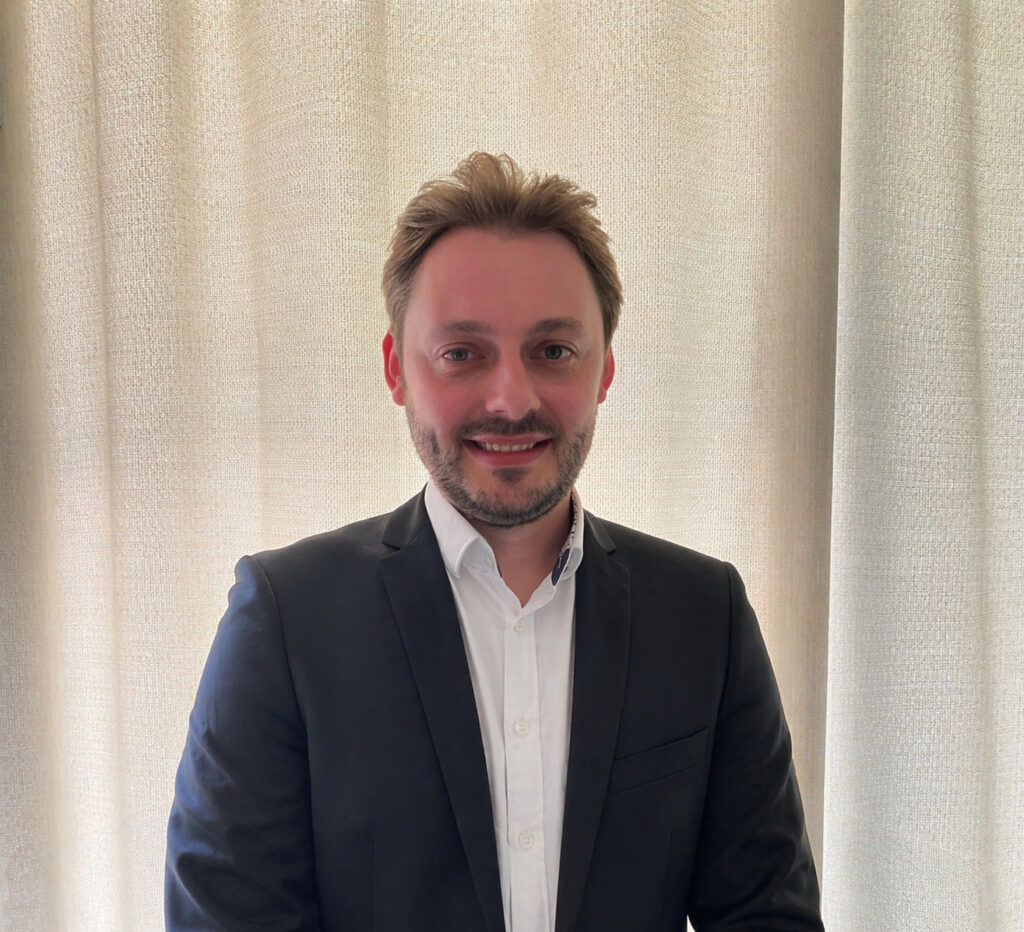
Presenter: Julien Homo
Julien Homo is a Data Architect founder of Foxcub, a strategic consulting and Data & AI architecture firm based in Paris. With over 14 years of experience, he advises and delivers large-scale data architectures for national research infrastructures and European ecosystems, as well as for major corporate groups (Capgemini, Crédit Agricole, Repsol, BNPP, EDF). He leads technical foundations for strategic Horizon Europe programmes including LUMEN, GRAPHIA, ATRIUM, and TRIPLE. His expertise spans semantic modelling, knowledge engineering, AI-driven enrichment, and interoperability strategies.
EVENT INFORMATION
- Welcome
- PART 1: Open Heritage Statement (Brigitte Vézina, Director of Policy and Open Culture at Creative Commons)
- PART 2: Graphia knowledge graph (Julien Homo, Foxcub, OPERAS)
- Q&A