From Material to Digital: Shaping the Visual Identity of AI4LAM
Designing a visual identity for AI4LAM required more than creating a contemporary “AI look.” The challenge was to express a specific position: AI as a continuation of cultural heritage practices, not a rupture from them.

Libraries, archives, and museums are deeply physical institutions. They are built on material realities—paper, ink, film, pigments, stone, and space. At the same time, they are undergoing a rapid transformation into digital infrastructures, where collections become data and access is mediated by algorithms.
Materiality as a Starting Point
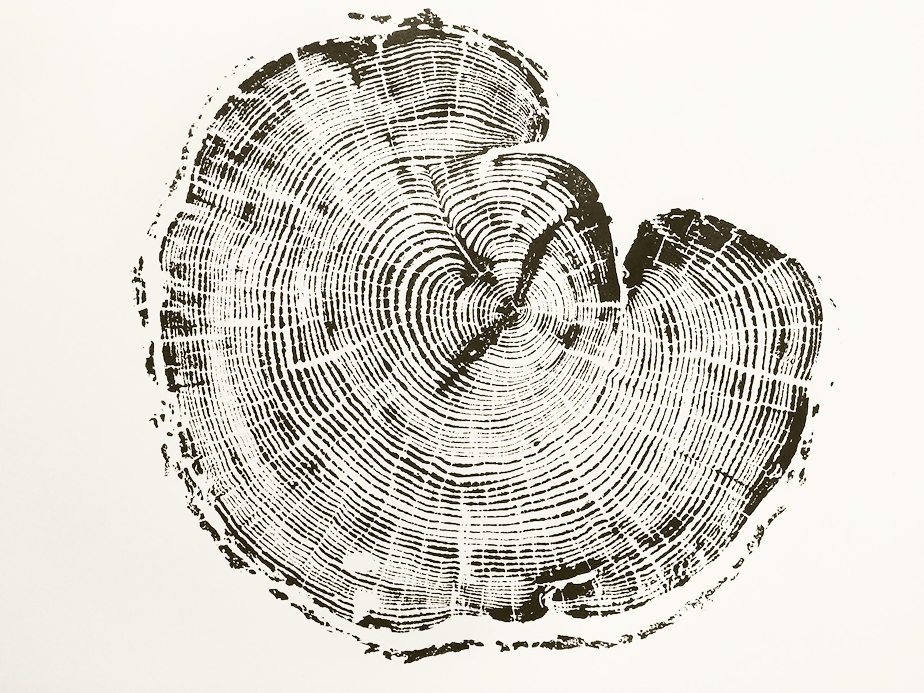
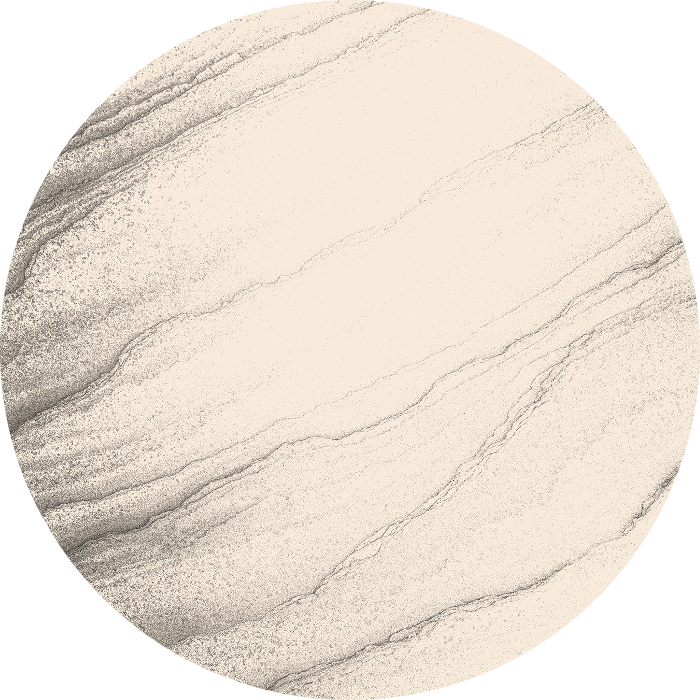
Rather than starting from abstract, futuristic AI aesthetics, the concept begins with material textures. Scanned surfaces, grains, traces, and imperfections reference the physical origins of knowledge and memory. These elements echo the tactile qualities of books, archival documents, photographs, and museum artifacts.
This grounding in materiality reflects the role of LAM institutions as custodians of physical culture, even as they move into digital environments.
The Dither Effect as Translation
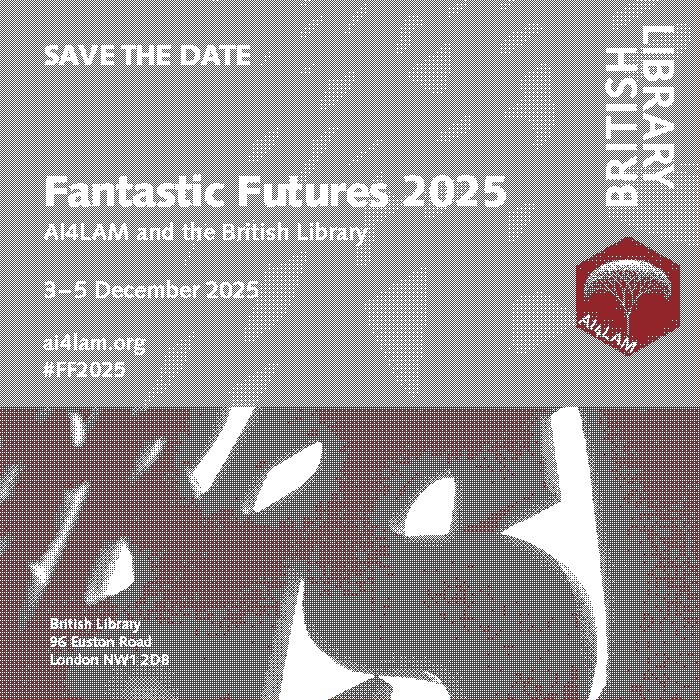
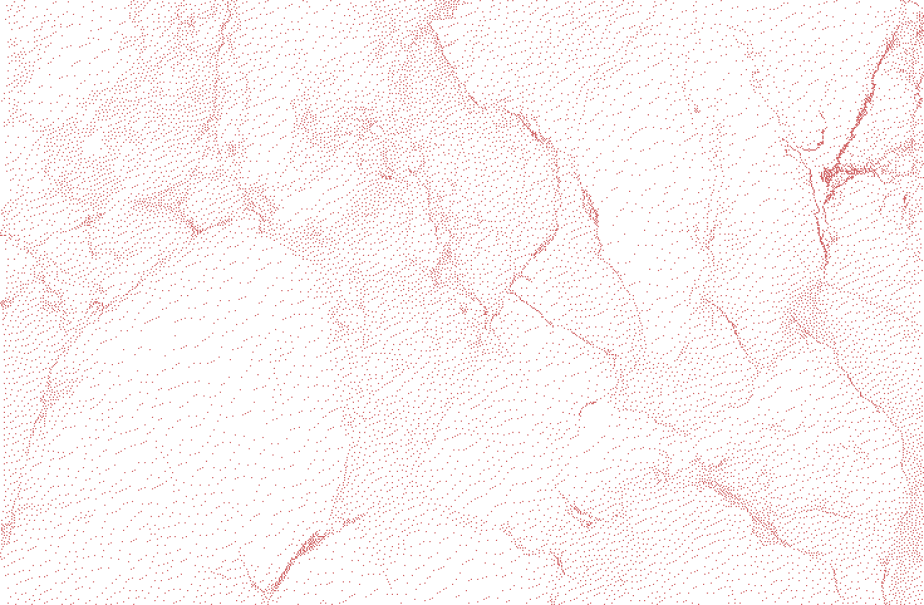
The dither effect is used as a core visual mechanism. Historically associated with early digital imaging and print reproduction, dithering sits precisely at the boundary between analogue and digital.
In the AI4LAM identity, dithering becomes a visual metaphor:
- Material surfaces dissolve into data.
- Continuous tones break into discrete points.
- Physical textures are translated into digital structures.
This mirrors how AI systems operate—by fragmenting, interpreting, and recomposing information—and how cultural heritage is transformed when it becomes machine-readable.
Digital Matter, Not Digital Abstraction
The result is not a sleek or purely technical aesthetic. Instead, the visual language treats digital information as matter: something granular, imperfect, and evolving. Movement and variation in the textures suggest ongoing transformation rather than fixed states.
This approach avoids common AI clichés and instead positions AI as something shaped by human knowledge, history, and ethics—values central to AI4LAM’s mission.
Creative and Technical Collaboration
The concept was developed in close collaboration with the digital agency Dekode, with creative direction led by Erik Ferrier and Vanessa Tesorone. The process combined strategic design thinking with hands-on experimentation, allowing visual ideas to evolve directly through making.
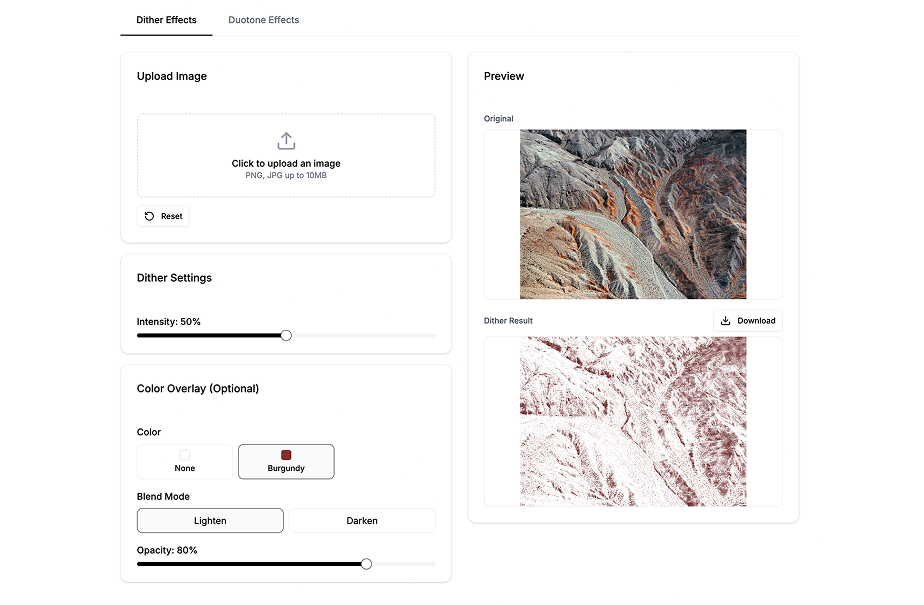
A key part of this process was the development of a custom dithering tool using vibecoding: an exploratory, iterative way of coding where visual outcomes guide technical decisions in real time. Instead of relying on existing filters or static effects, the tool was built to allow fine-grained control over texture, density, and variation.
This bespoke tool enables the visual language to remain consistent yet flexible, supporting both still imagery and motion.
From Experiment to Infrastructure
To ensure the concept could live beyond static assets, the dithering tool was further developed into a WordPress plugin. This allows AI4LAM to generate and apply the visual treatment directly within its digital ecosystem, aligning design, content, and technology.
By turning an experimental design tool into reusable infrastructure, the process reflects AI4LAM’s broader mission: transforming innovation into shared, practical solutions that can scale across institutions and contexts.
A Visual Expression of AI4LAM’s Role
Conceptually, the identity reflects AI4LAM’s position as a bridge:
- Between physical collections and digital systems
- Between heritage institutions and emerging technologies
- Between ethical responsibility and technological innovation
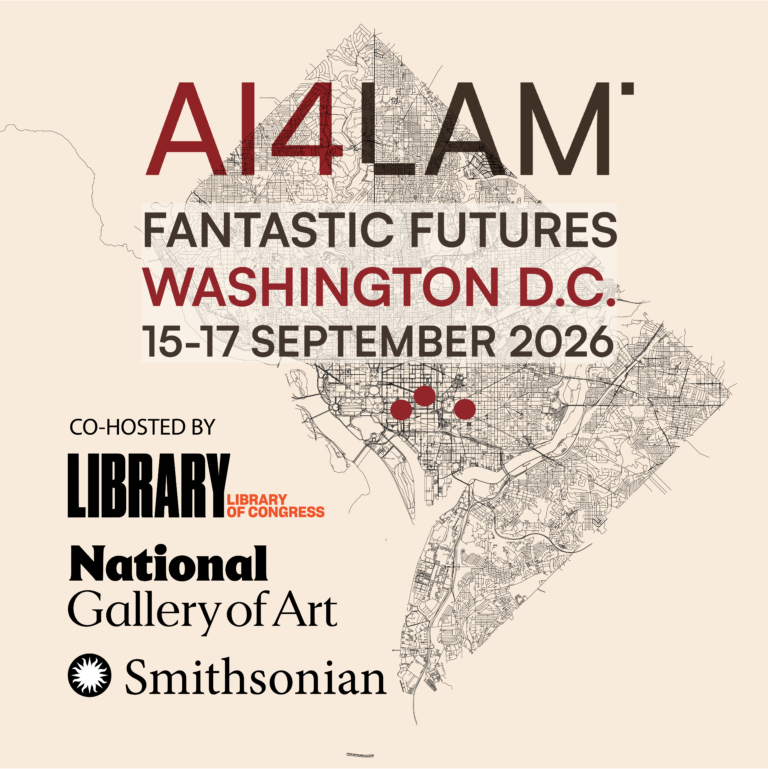
The visual system is designed to be flexible and generative, able to adapt across events, presentations, screens, and print—just as AI4LAM itself operates as a platform for shared knowledge, experimentation, and collaboration.
In this way, the brand identity does not illustrate AI.
It visualizes transformation.