Dartmouth Libraries Has Joined AI4LAM as a Founding Member
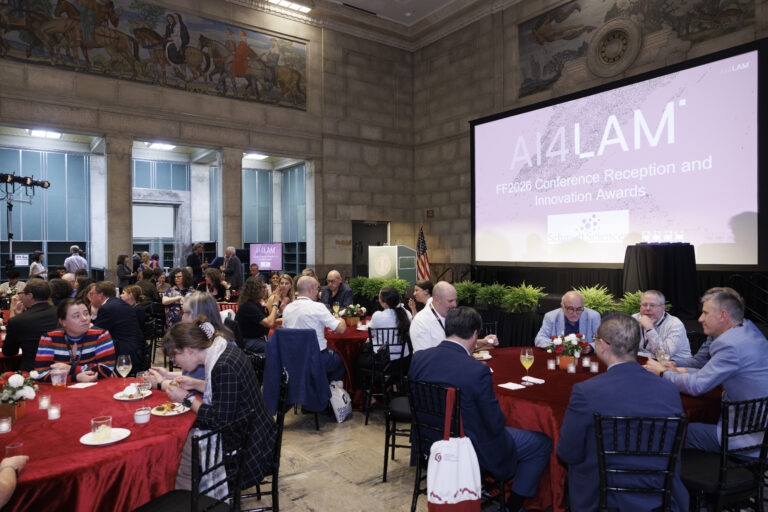
At this year’s Fantastic Futures Conference, AI4LAM was delighted to celebrate Dartmouth Libraries joining the community as a founding member. The occasion brought together Daniel Chamberlain, Associate Dean of Libraries, Research & Digital Strategies at Dartmouth Libraries, AI4LAM Secretary General Ines Vodopivec, and library colleagues, highlighting a shared commitment to advancing best practices at the intersection of artificial intelligence and cultural heritage. Through collaboration, knowledge exchange, and community engagement, AI4LAM continues to foster responsible and innovative uses of AI across libraries, archives, and museums.
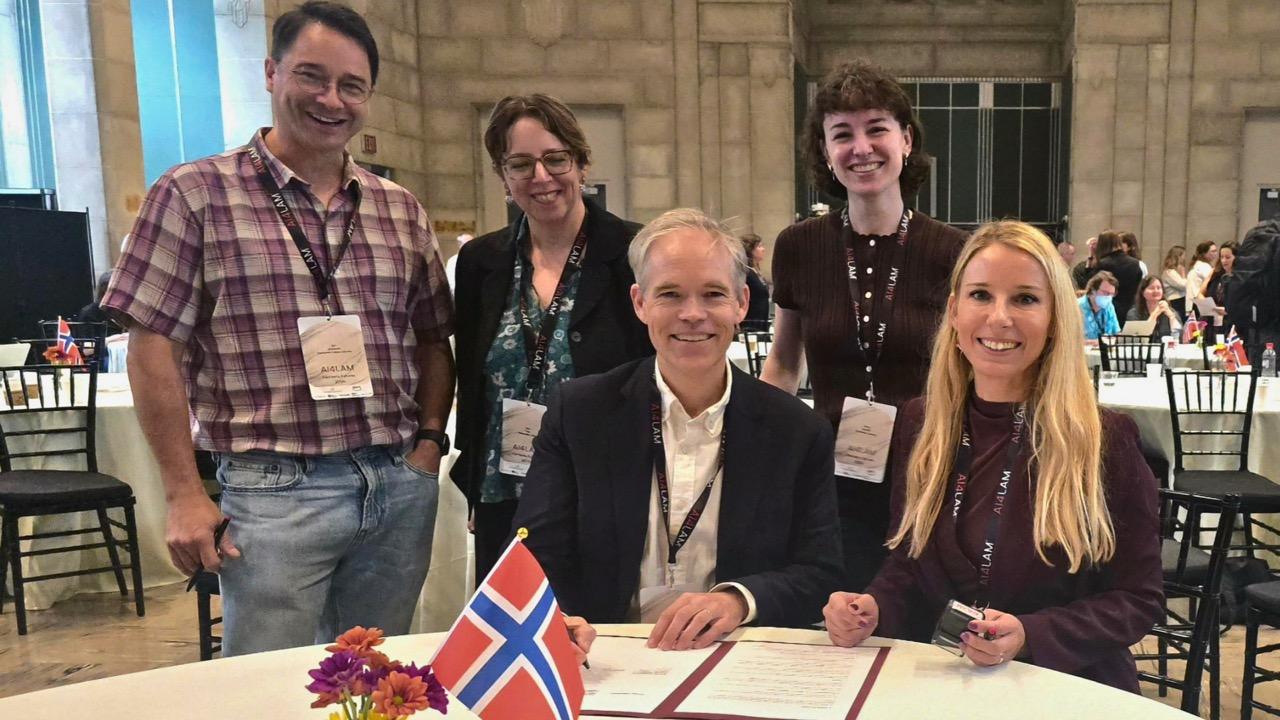 Joe Montibello, Este Pope, Daniel Chamberlain, Kelsey Sheaffer, and Ines Vodopivec at the AI4LAM Fantastic Futures Conference
Advancing Best Practices at the Intersection of Artificial Intelligence and Cultural Heritage
At Dartmouth Libraries, we are collaborators and partners in the teaching mission and research enterprise at Dartmouth and beyond. Powered by questions, we spark discovery—within ourselves, our community, and our world. We champion and facilitate prestigious, innovative research, knowledge creation and dissemination to partner in taking on the world’s greatest challenges.
The Dartmouth Libraries are exploring the reflective and effective use of AI to augment the human judgment required for research, learning, and library practices. They have spent years developing open and public repositories of research collections, decades adapting information retrieval and information literacy expertise to new computational technologies, and centuries establishing professional standards focused on stewarding cultural heritage and providing long-term access to trusted scholarly resources. They have the expertise, resources, and tools to help communities develop reflective and effective approaches to changes in the emergent information ecosystem. They are focused on support for three broad aspects of the Dartmouth community:
- Critical information literacies: understanding what AI tools can and can’t do, how they function, and the externalities associated with their use
- Advanced research support: data-intensive scholarship, NLP, transcription, cultural heritage AI methods, and archive/collections-based computational work
- Exploring new tools and workflows: evaluating which tools to enable internally and/or for the community, and ensuring that all staff have professional engagement options to develop confidence navigating the emergent information environment.
Susanne Mehrer, Dean of Libraries, is thrilled that Dartmouth has joined a community of practice working to shape the future of AI across cultural heritage environments. In signing the memorandum of understanding, the Libraries has joined 65 libraries, archives, and museums worldwide to
advance responsible, reliable, and trustworthy applications of artificial intelligence approaches to cultural heritage materials and environments, As founding members, we’re now connected to this worldwide peer network collaboratively exploring, documenting, building, and sharing thoughtful approaches to cultural heritage stewardship.
Artificial Intelligence for Libraries, Archives, and Museums
At a time when for-profit companies drive much of the AI discourse, from model development and regulation to future possibilities, AI4LAM provides a valuable space for collaboration, knowledge sharing, and critical engagement. Reflecting on its importance, Daniel Chamberlain, Associate Dean of Libraries, Research & Digital Strategies, notes:
As information professionals, we have a special responsibility to critically engage with and understand this emergent information ecosystem. At a time when for-profit companies drive much of the AI discourse, it is crucial that we participate in professional networks committed to humanity’s creative potential and to centering our communities when stewarding cultural heritage.
AI4LAM provides such a space, bringing together an international community dedicated to thoughtfully advancing the use of AI in libraries, archives, and museums. It offers that as an international, participatory community focused on carefully advancing the use of artificial intelligence in and by libraries, archives, and museums.
AI4LAM envisions a future where the collective strength of GLAM institutions drives innovation in the cultural heritage sector through responsible, reliable, and trustworthy AI solutions, fostering cultural development and societal growth for a better tomorrow.
Launched in 2018, AI4LAM was initially a collaboration between Stanford University Libraries and the National Library of Norway. Their first activities were applying AI to transform, support, and shape cultural heritage and research, contributing to the commonwealth of knowledge for the benefit of humankind. A grand challenge like this, notes Mehrer
demands both deep engagement with local communities and a collective effort among like-minded institutions.
Critical Engagement and Human Judgement
The Libraries’ role in AI4LAM is to collaborate in exploring and sharing secure, ethical, and responsible AI applications that support faculty, students, researchers, and other users of institutional AI resources.
At Dartmouth Libraries, fostering trust, curiosity, and respect guides how artificial intelligence is discussed, explored, and applied in everyday work. This approach reflects a broader commitment to AI literacy, emphasizing the importance of centering human expertise and trusted resources while engaging seriously with emerging technological and media systems. As Daniel Chamberlain explains:
We focus on leading with trust, curiosity, and respect for our community when we engage, discuss, and apply artificial intelligence in our work. Our AI literacy work emphasizes the importance of centering human expertise and trusted resources while engaging seriously with emergent technological and media systems. We help the community make sense of discipline-specific and general-purpose AI tools alongside trusted library catalogs, databases, and resources on the open web.