Trust in the Loop: Highlights from Fantastic Futures 2026
Digital Curators Nora McGregor and Adi Keinan-Schoonbaert from British Library share highlights from AI4LAM’s Fantastic Futures 2026 conference, exploring how memory institutions navigate AI-enabled services while maintaining trust, authenticity, and accountability.
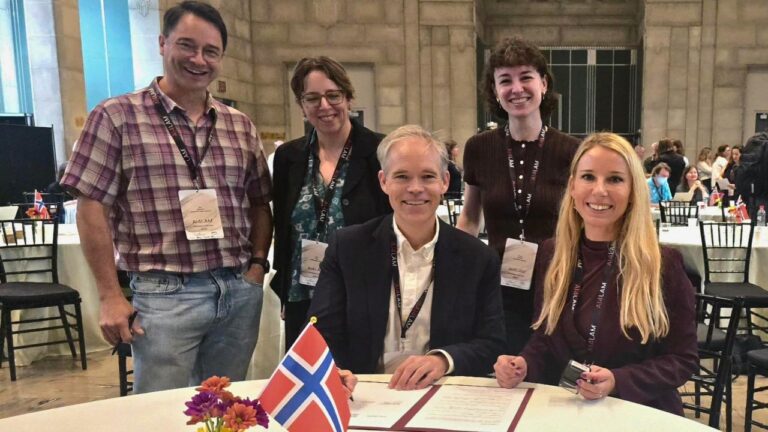
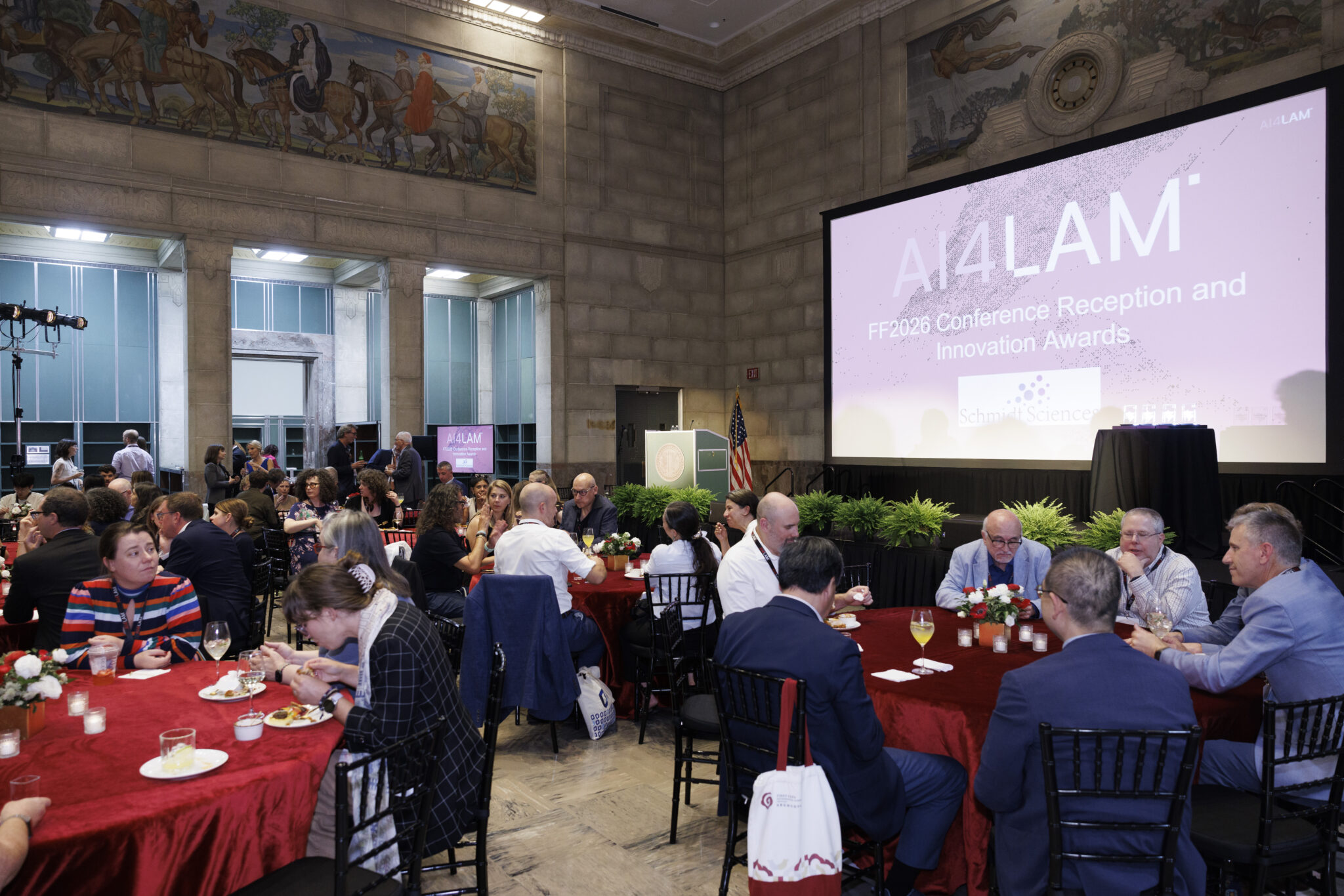 AI4LAM awards reception at the Library of Congress, September 16, 2026. Photo by Shawn Miller/Library of Congress. Note: Privacy and publicity rights for individuals depicted may apply.
Across keynotes, panels and lightning talks, Fantastic Futures 2026 conference explored how libraries, archives and museums can build trustworthy, community-centred and publicly accountable AI systems while retaining human agency and public value.
AI4LAM, in collaboration with colleagues at Library of Congress, National Gallery of Art, and the Smithsonian delivered the biggest Fantastic Futures conference yet. Fantastic Futures 2026: Trust in the Loop took place in Washington, D.C., from 15 to 17 September 2026, attracting a record 350 in-person attendees and more than 400 online participants. Recordings are already available on AI4LAM YouTube channel.

On AI for cataloguing
Seeing Metadata: AI Glasses in Cataloguing: Enhancing Trust, Context, and Human Oversight in LAM Workflows by Hannes Lowagie, a recipient of a Schmidt Sciences sponsored Innovation Award, was one of the most talked-about cataloguing presentations, demonstrating the use of AI-enabled smart glasses to support cataloguing work. The project builds on earlier efforts at the National Library of Belgium (KBR) to develop AI-assisted cataloguing workflows designed to help address both retro and contemporary cataloguing backlogs.
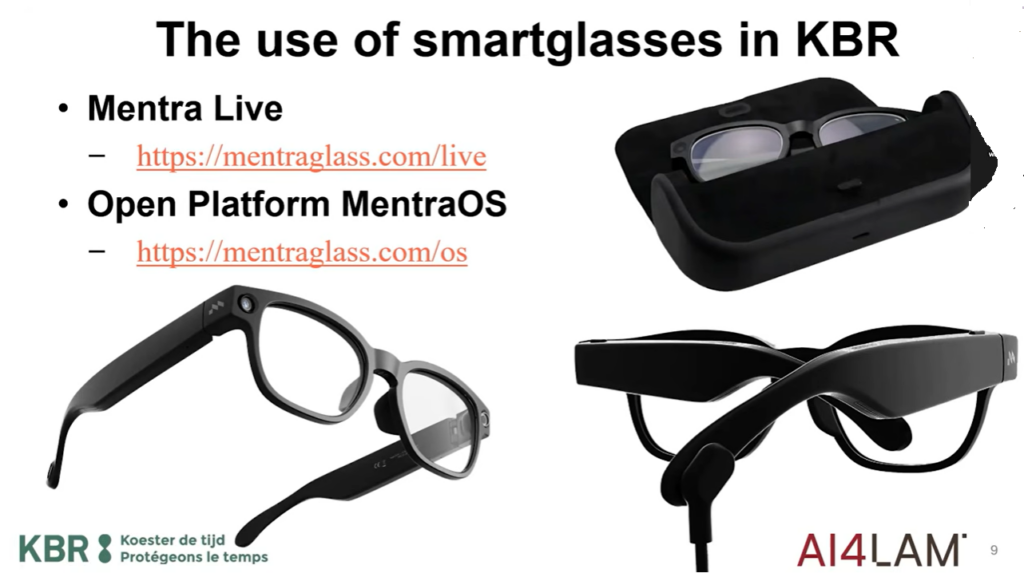
This innovative approach embeds AI directly into day-to-day cataloguing practice, supporting the cataloguers with efficient bibliographic data extraction and assisting with the creation of catalogue records. At the British Library, we’ve been doing quite a lot of work behind the scenes to support no- and low-code citizen development through Microsoft Power Platform. We’d like to explore whether a similar application could be adapted for our own workflows, with an experimental trial planned for early next year. We’ll be keeping a close eye on how this AI glasses integration fares!
On vibe coding
One lightning talk explored a challenge that organisations are beginning to encounter: what happens when AI makes it possible to build useful software faster than organisations can plan for its long-term support? Daoyi Chen, Metadata Librarian at Yale, described how a five-person metadata team used AI-assisted development to create a tool that enabled staff to more easily access information stored in legacy databases, in the talk Building Capacity, Maintaining Trust: AI-Assisted Development in an IT-Adjacent Library Unit.
The team succeeded in building a highly effective solution in a short period of time. However, as user adoption grew, they found themselves confronting a series of questions that had received less attention during development: who would own the application, how it would be documented, maintained and supported, and how it would evolve over time?
The presentation resonated with our own work at the British Library. Through our Digital Scholarship Training Programme we have seen growing interest in low-code development and AI-assisted coding. As these capabilities become more accessible, helping staff think about governance, sustainability and support becomes just as important as teaching technical skills. Our upcoming staff workshop, dedicated to vibe coding and no-code citizen development, will explore how approaches such as A3 Thinking can help staff consider purpose, ownership, maintenance and long-term success before they begin building.
On the case for Public AI
Several sessions touched upon a common theme: how cultural heritage institutions can help shape the future of AI rather than simply respond to it.
Harry Verwayen, General Director of Europeana and AI4LAM Board Member, gave a resounding call to action to members to help build a better AI future. Rather than leaving the future of AI solely in the hands of commercial providers, his vision of Public AI is of an ecosystem guided by public values, transparency and accountability, with cultural heritage organisations playing an active role in its development.
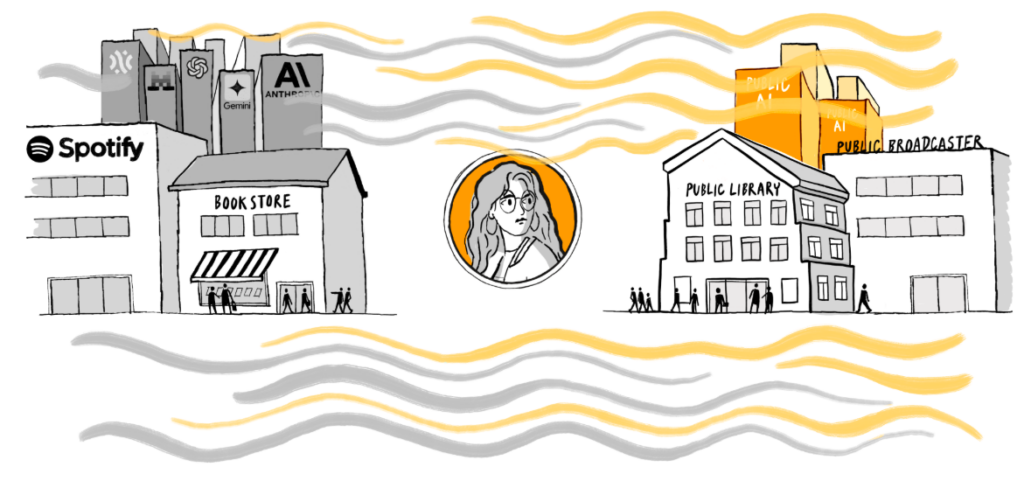
Drawing on The Case for Public AI: Making it Happen with Cultural Heritage, a position paper developed through the Alignment Assembly on Culture for AI and published earlier this year, Verwayen argued that libraries, archives and museums possess something uniquely valuable: vast collections of curated, multilingual and contextualised content that can help create more trustworthy AI systems. The paper calls on cultural heritage institutions not only to provide high-quality and traceable data, but also to help shape the conditions under which that data is used, support the development of domain-specific models, and strengthen AI literacy across both the sector and wider society.
This theme was reinforced by an excellent presentation from Jon Lloyd, Director of Advocacy for the Digital Public Goods Alliance, who introduced the practical guidance contained in the DPG Defence Playbook. His talk highlighted a growing challenge facing many cultural heritage organisations: the changing nature of engagement with openly available digital content. Increasingly, institutions are finding that a significant proportion of traffic to their collections originates not from people, but from bots and AI crawlers. Human traffic dropped to 47% – a figure which continues to fall, according to the 2026 Bad Bot Report, meaning the majority of web activity is now non-human!
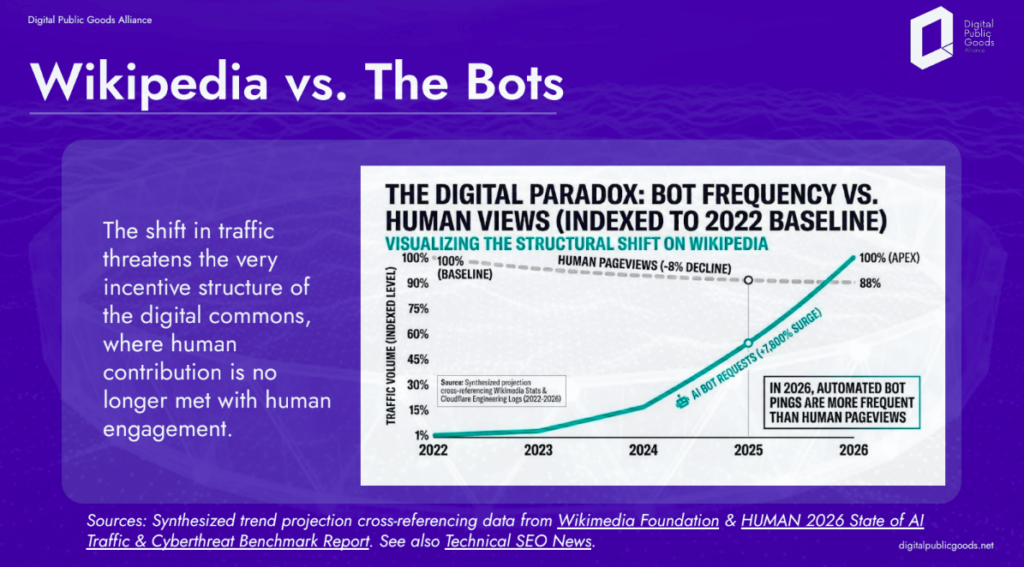
This raises important questions about what ‘open’ means in an era of large-scale AI-based content harvesting. For many institutions, openness is no longer simply about making as much content as possible freely available online. Instead, there is growing interest in ensuring that access, reuse and attribution remain aligned with organisational missions, public benefit and the FAIR principles. The concept of reciprocity featured prominently in these conversations: if cultural heritage collections help power future AI systems, what should institutions and the public receive in return?
What’s next?
The conversations around Public AI, openness and reciprocity defined some of our main challenges for the years ahead. As AI capabilities continue to evolve, libraries, archives and museums will need to decide not only how they adopt these technologies, but also what role they want to play in shaping the broader AI ecosystem.
It is therefore fitting that the theme for Fantastic Futures 2027 will be Public AI and Digital Convergence. Building on many of the debates that emerged in Washington, next year’s conference in Amsterdam promises to explore these questions in much greater depth. We look forward to continuing the conversation in Amsterdam!